Collect
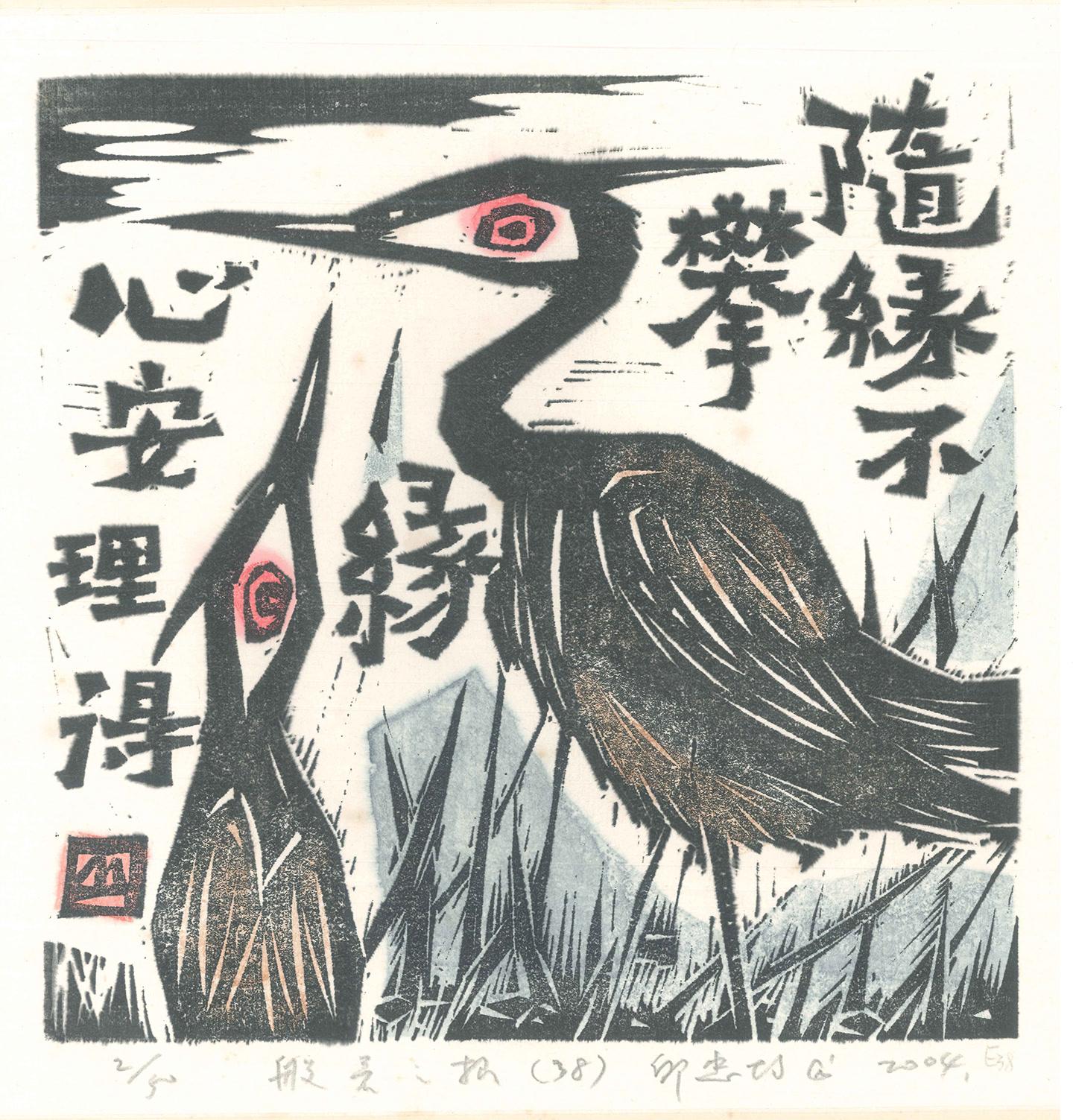
Root of Prajna (38)
Watermark woodblock print
Size 25x25cm
NTD 31,500 (USD 971.14) (After Tax)
Certificate
M2026WDT000039PA
此資產證號(M2026WDT000039PA)為登錄憑證;著作權或授權內容以另行標示為準。

Artist
Chiou Jong Jiun
Creation Year
2004
Condition Status
Well
Supplier
POST WINGS
Introduction
The "Root of Prajna (39)" series shifts Buddhist art from sacred forms to the everyday beings. Birds, beasts, insects, flowers, and trees, along with their habitats, appear mundane, yet through inscriptions, composition, and the rustic language of watermarked woodcuts, they become a site for the contemplation of life. The "prajna" depicted in the work is not an abstract wisdom that distances itself from life, but rather rooted in the postures of existence of all things, the interdependent relationships, and the ongoing labor of the creator.
Video Intro
None
Exhibition Resume