Collect
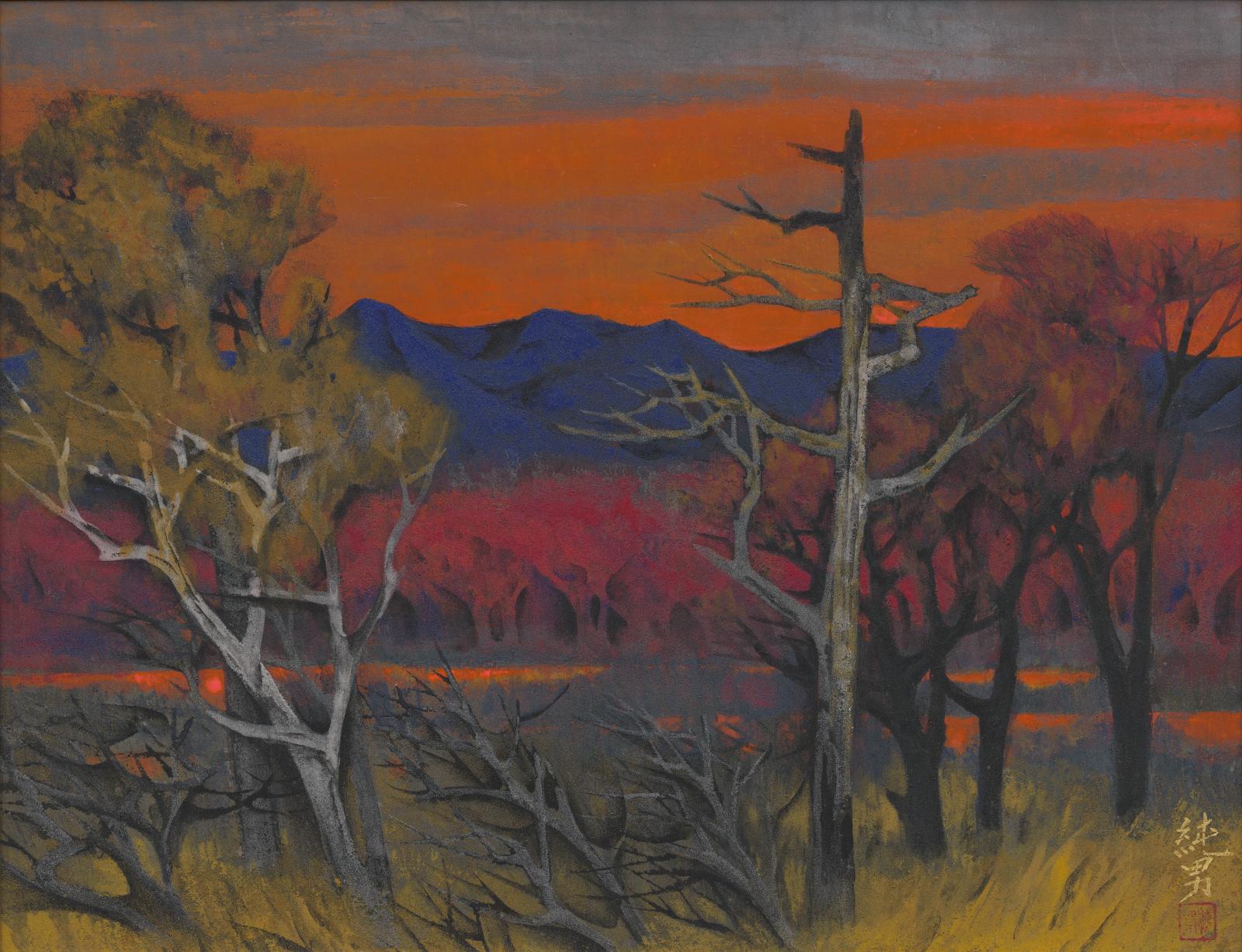
Northern Country Dusk (Jun'ō Gotō)
Painting
Size 55cm x 43cm
Price Not Set | Contact us to inquire about artwork status and collection availability
Certificate
M2026OOC000185OW
Metaassets所提供之藝術品登錄、上鏈與資料建檔服務,係依據收藏家或使用者自行提供之資訊進行記錄與展示。Metaassets(元宇宙資產股份有限公司)不具備藝術收藏品真偽鑑定或來源查證之法律責任,亦不對藝術品之真實性、合法性、完整性或權屬關係提供任何明示或默示之保證。
收藏家於進行收藏、交易或相關決策前,應自行審慎評估藝術品之真偽、來源及市場風險;因前述因素所生之一切法律、財務或交易爭議,概由使用者自行承擔,與本平台無涉。

Collector
Ivy
Creation Year
1975
Condition Status
Well
Supplier
Provided by a collector
Introduction
"North Country Twilight" is themed around the northern wilderness illuminated by dusk, depicting the magnificent scene of the afterglow of the setting sun covering the earth. In the painting, the burning orange-red sky contrasts sharply with the distant deep blue mountains, rendering the boundary between heaven and earth particularly profound; the intertwined dead trees in the foreground, the golden grasslands, and the scarlet forests collectively construct the rhythmic transition from late autumn to early winter. Jun'ichi Goto does not intentionally create dramatic natural wonders but instead through layers of color and tranquil spatial arrangements, he allows twilight to become a spiritual realm that condenses time and life, letting viewers feel the silent yet profound power of nature in stillness.
The work fully embodies the artist's creative philosophy of "painting as practice," meticulously stacking natural mineral pigments to achieve the warm and substantial texture of Japanese painting, causing the fiery red of the sky, the indigo of the mountains, and the ochre of the forests to blend together, showcasing the rhythmic vitality contained within the transition of the seasons. The standing dead trees in the painting symbolize the washing of time and reflect the resolute spiritual posture of life that remains steadfast after enduring the elements; while the afterglow of the sunset serves as the last light of heaven and earth, gently covering all things and bestowing upon the scenery a spiritual significance that transcends reality. Through a delicate and reverent gaze at nature, Jun'ichi Goto elevates the late autumn of the North Country into a serene poem about time, life, and the co-existence of heaven and earth.
The work fully embodies the artist's creative philosophy of "painting as practice," meticulously stacking natural mineral pigments to achieve the warm and substantial texture of Japanese painting, causing the fiery red of the sky, the indigo of the mountains, and the ochre of the forests to blend together, showcasing the rhythmic vitality contained within the transition of the seasons. The standing dead trees in the painting symbolize the washing of time and reflect the resolute spiritual posture of life that remains steadfast after enduring the elements; while the afterglow of the sunset serves as the last light of heaven and earth, gently covering all things and bestowing upon the scenery a spiritual significance that transcends reality. Through a delicate and reverent gaze at nature, Jun'ichi Goto elevates the late autumn of the North Country into a serene poem about time, life, and the co-existence of heaven and earth.
Video Intro
None
Exhibition Resume