Collect
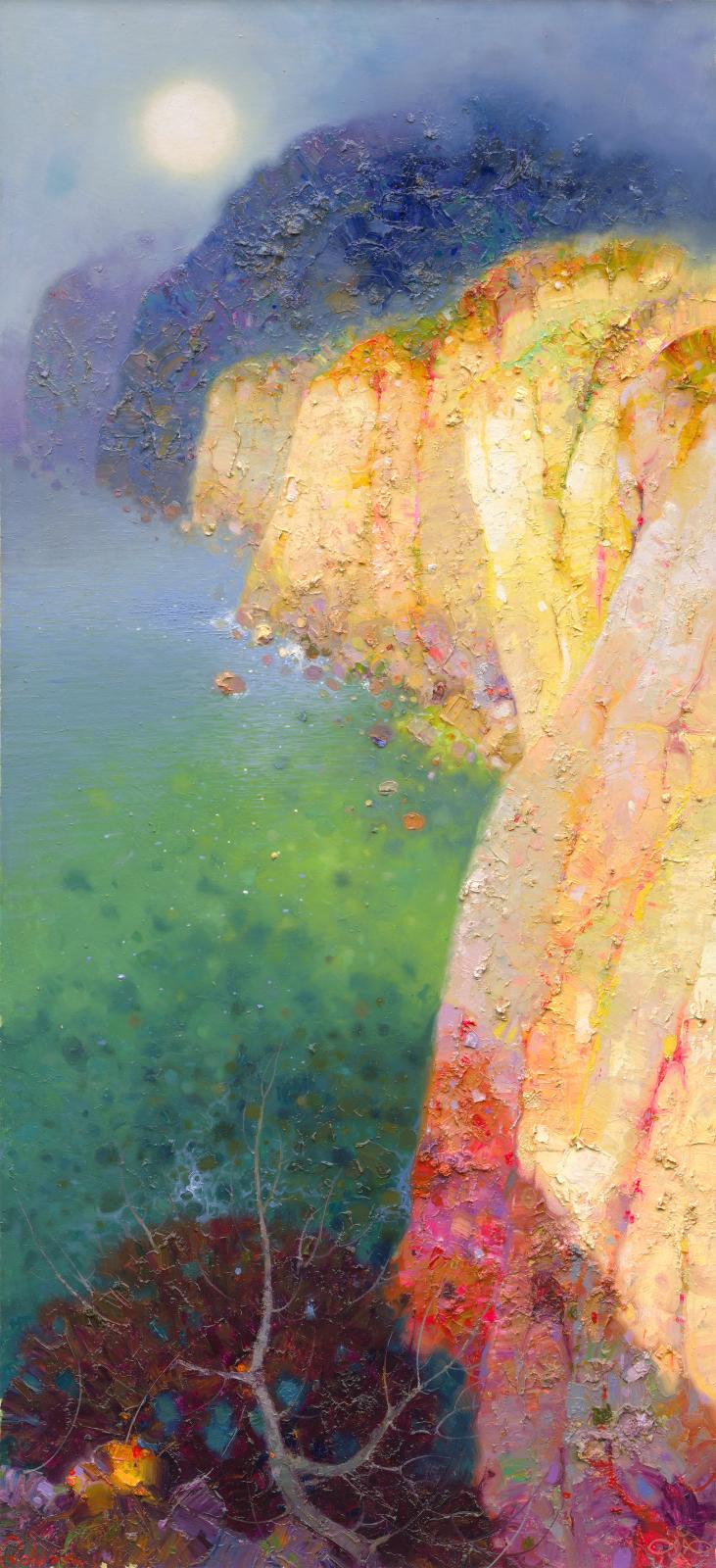
Dawn and Moon (Pierre-Auguste Rodin)
Painting
Size 70cm x 33.5cm
Price Not Set | Contact us to inquire about artwork status and collection availability
Metaassets所提供之藝術品登錄、上鏈與資料建檔服務,係依據收藏家或使用者自行提供之資訊進行記錄與展示。Metaassets(元宇宙資產股份有限公司)不具備藝術收藏品真偽鑑定或來源查證之法律責任,亦不對藝術品之真實性、合法性、完整性或權屬關係提供任何明示或默示之保證。
收藏家於進行收藏、交易或相關決策前,應自行審慎評估藝術品之真偽、來源及市場風險;因前述因素所生之一切法律、財務或交易爭議,概由使用者自行承擔,與本平台無涉。

Rodin's focus is not on the geographical aspects of the landscape but rather on constructing a spiritual realm that exists between reality and dream through the use of light, color, and spatial layers. The moon symbolizes tranquility and contemplation, while the dawn signifies hope and rebirth; both coexist within the painting, filling the work with philosophical reflections on the passage of time. Through highly poetic handling of light and shadow, the artist allows the natural scenery to transcend realistic representation, elevating it to a spiritual landscape where emotions and memories intertwine, guiding viewers to experience the eternal beauty borne from the confluence of light and time at the tranquil coastline, as well as the profound life force contained within nature.
None
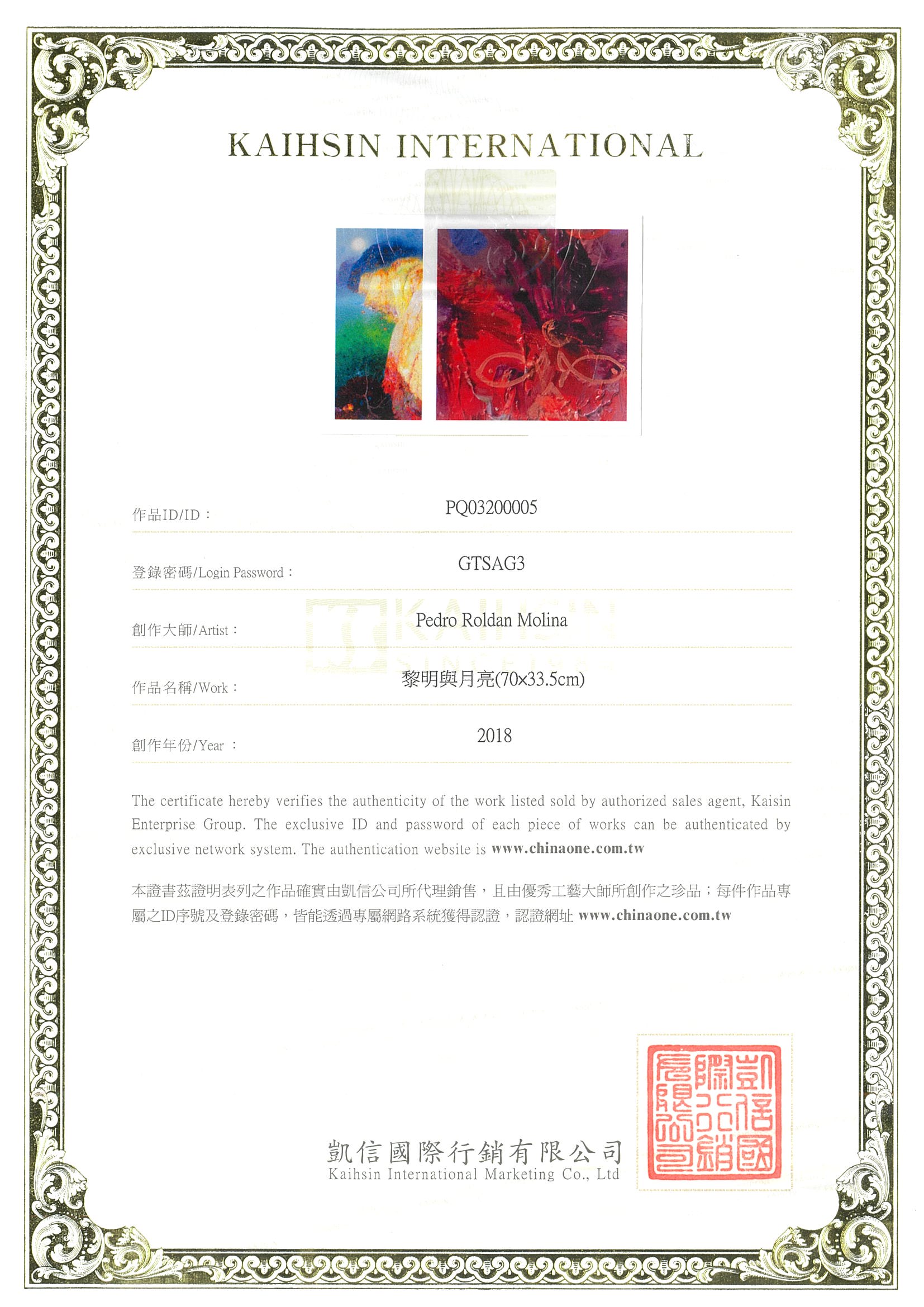
Certificate of Authenticity (Provided by Kaixin International Marketing Co., Ltd.)
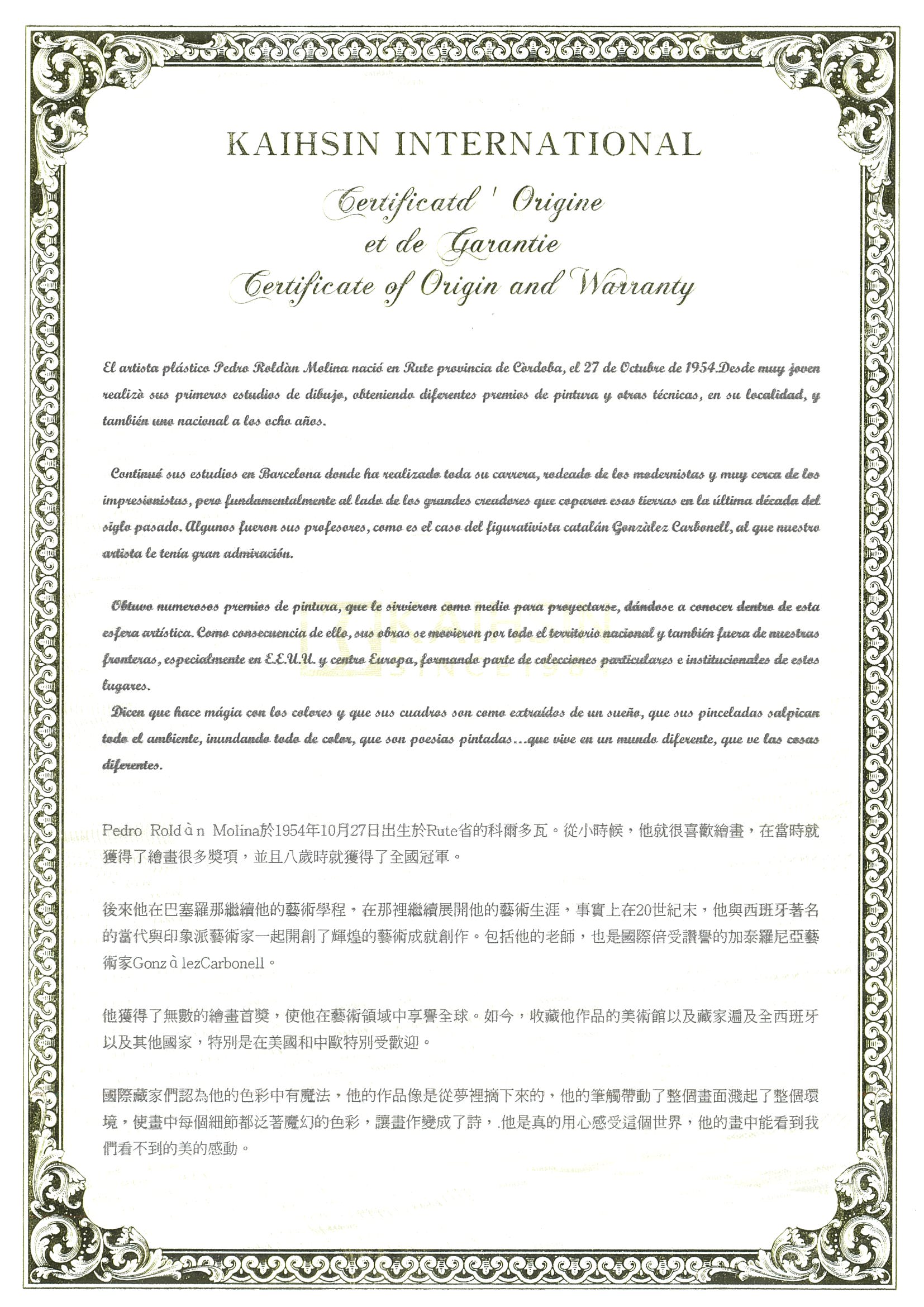
Art Piece Guarantee Certificate (Provided by Kaixin International Marketing Co., Ltd.)