Collect
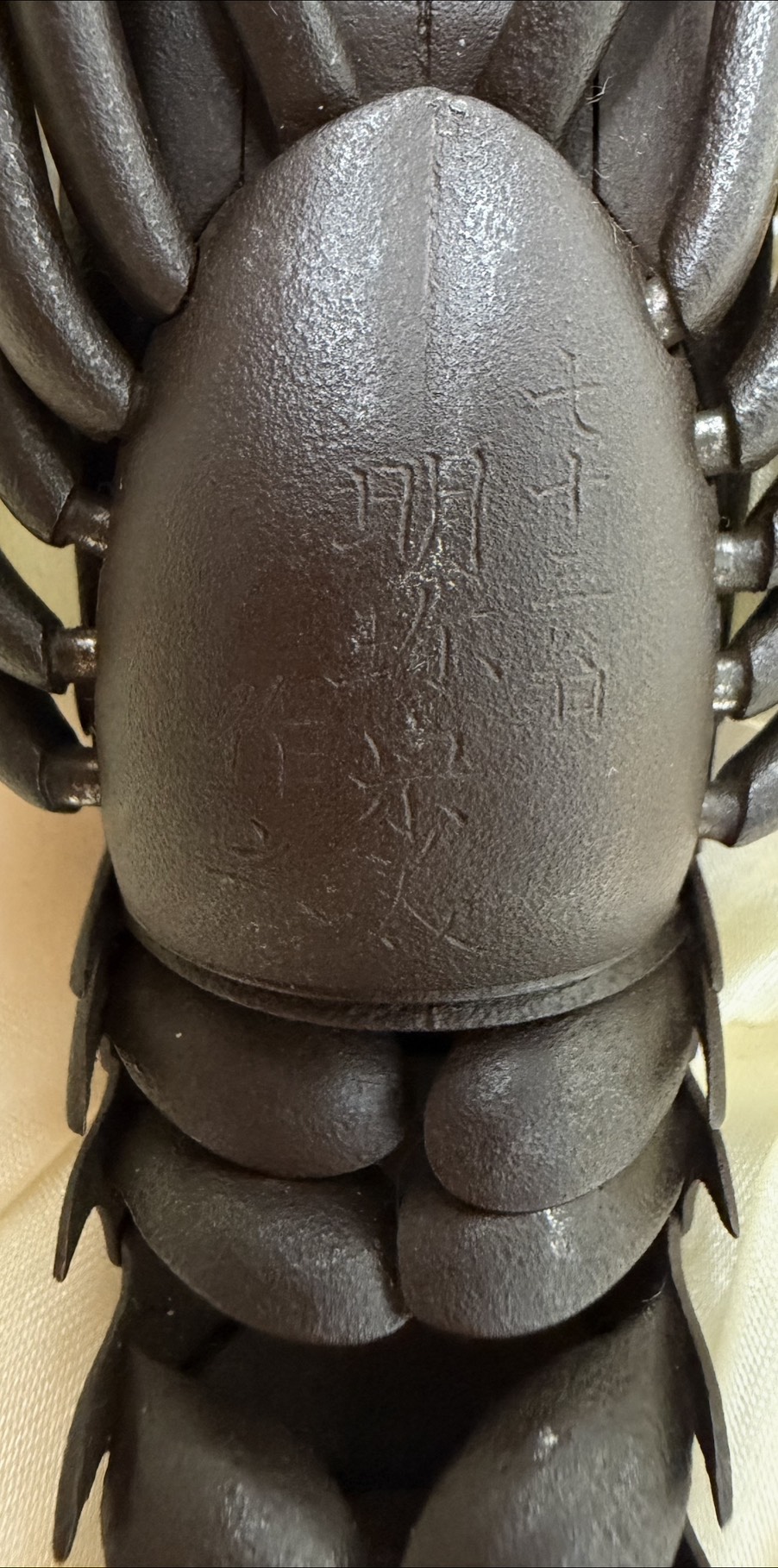
Myōchin Muneyoshi|Articulated Iron Lobster (Jizai Okimono)
鐵製, Cultural assets
Size O.L. 39.5cm Body 18 cm
Metaassets所提供之藝術品登錄、上鏈與資料建檔服務,係依據收藏家或使用者自行提供之資訊進行記錄與展示。Metaassets(元宇宙資產股份有限公司)不具備藝術收藏品真偽鑑定或來源查證之法律責任,亦不對藝術品之真實性、合法性、完整性或權屬關係提供任何明示或默示之保證。
收藏家於進行收藏、交易或相關決策前,應自行審慎評估藝術品之真偽、來源及市場風險;因前述因素所生之一切法律、財務或交易爭議,概由使用者自行承擔,與本平台無涉。

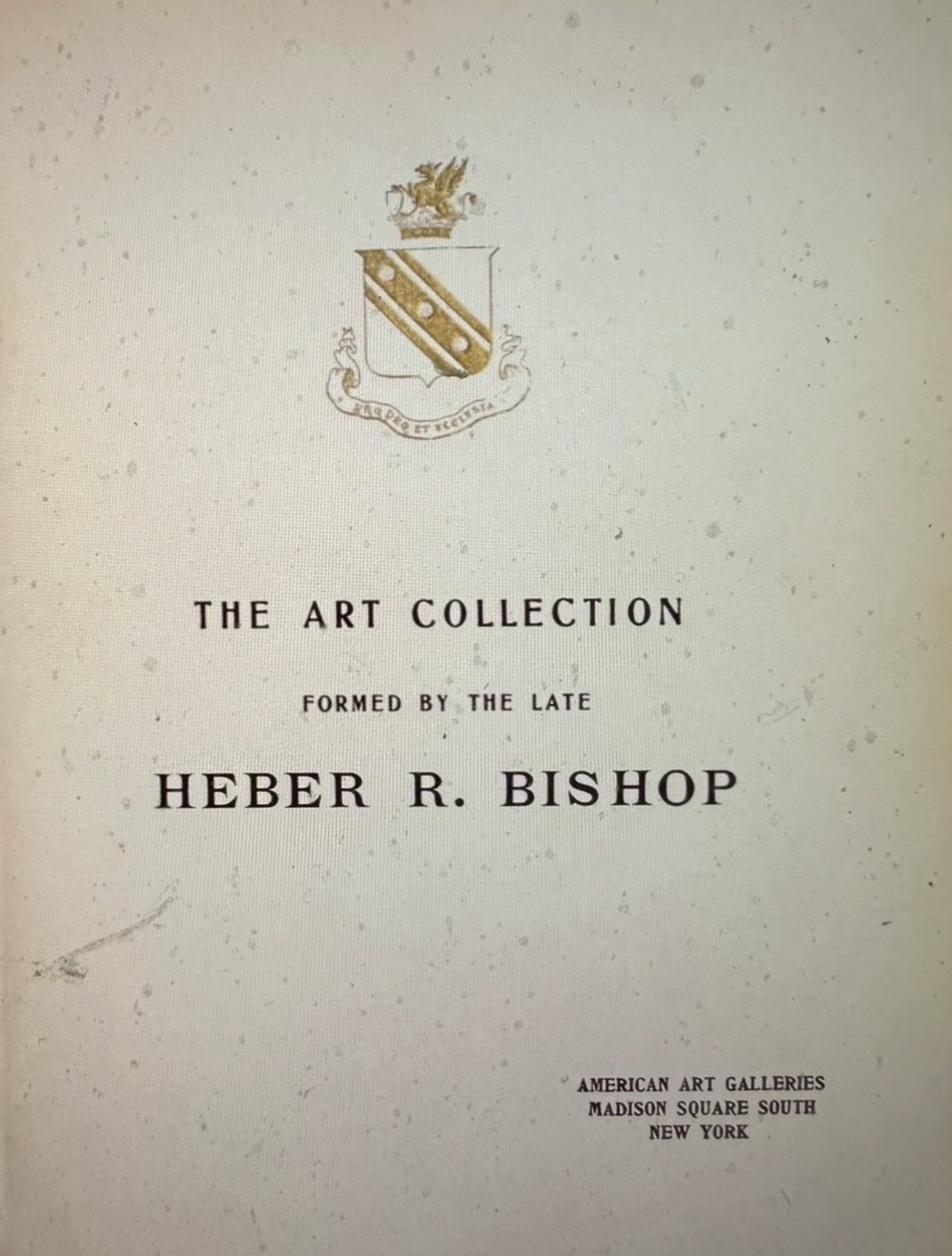
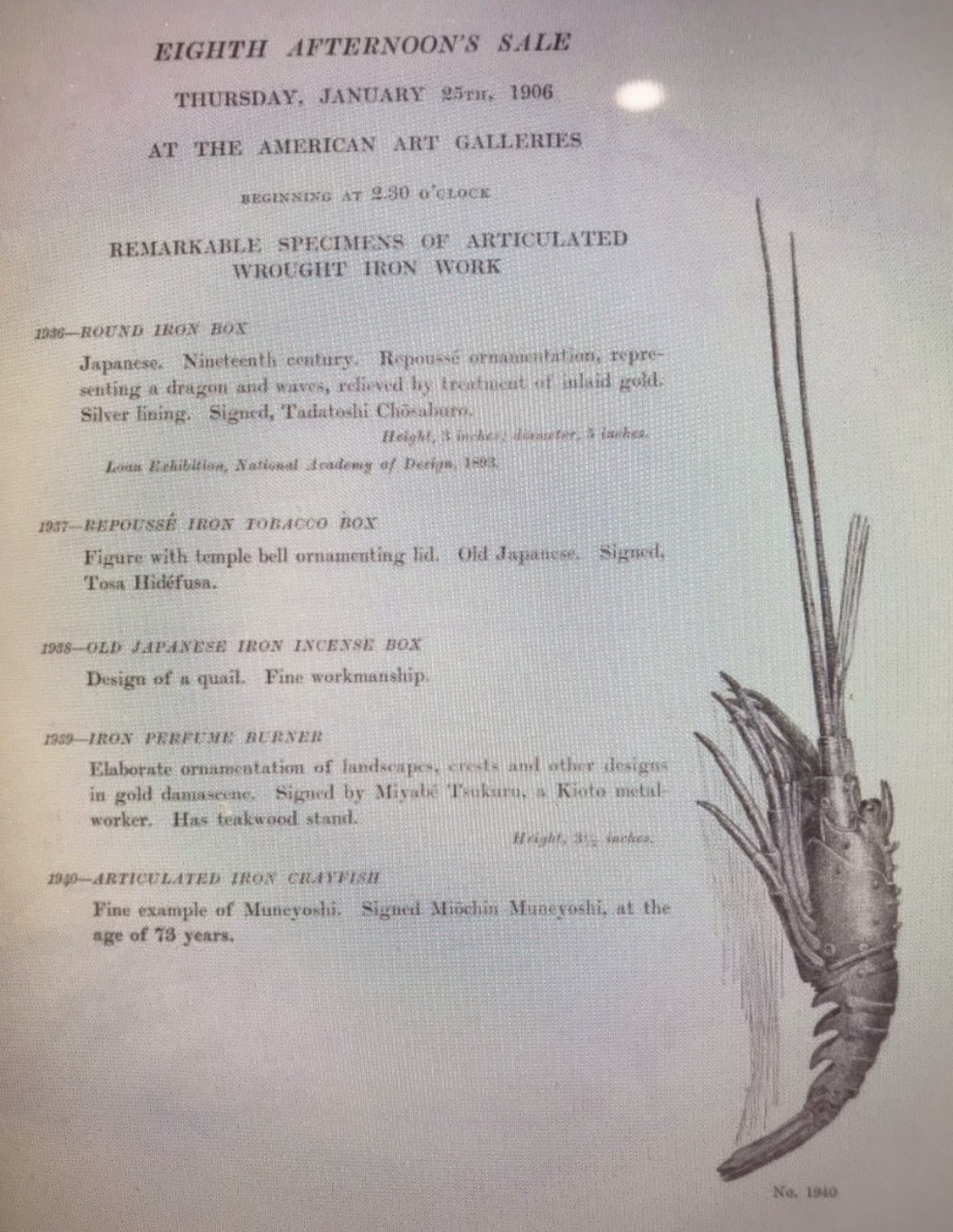
This work can be traced to the American Art Galleries sale, New York, January 25, 1906, where it appeared as part of the estate of the prominent American collector Heber R. Bishop (1840–1902), representing an early and significant entry into the international art market.
Myōchin Muneyoshi|Articulated Iron Lobster (Jizai Okimono) Reference Material One
Myōchin Muneyoshi|Articulated Iron Lobster (Jizai Okimono) Reference Material Two
Myōchin Muneyoshi|Articulated Iron Lobster (Jizai Okimono) Reference Material Three